I have been saying for more than twenty years that Israel does not exist, by which I meant what I still mean: that the modern State of Israel has no claim to the prophetic promises made to the covenant people of God. And I was right about that. But I need to be honest about something else.
For the same twenty years, I quietly held Zionistic sympathies. I believed Israel had a right to exist. I watched the news cycle and my instinct was to side with the state. I thought of the land of Israel as belonging, in some meaningful way, to the Jewish people, and I thought that supporting that claim was compatible with, perhaps even required by, my faith.
I was wrong. Not just partially wrong. Structurally wrong, wrong about what the Bible actually teaches, wrong about what the modern state actually is, and wrong to treat those two questions as though they were separable. October 7th, 2023 and its aftermath forced me to look at what I had been supporting. What I found is what this article attempts to lay out plainly.
This article stays with the theology and saves the politics for Part II, because Christian Zionism is, at its root, a theological error. And it is an error with a traceable origin, a manufactured history, and consequences that are now being paid in blood.
This is the plain text of the prophets rather than a metaphor. In Jeremiah 3, God states it explicitly: He gave faithless Israel a certificate of divorce and sent her away. The language is the legal vocabulary of the Mosaic covenant, the same covenant that defined Israel as a nation before God.
Hosea makes the same declaration in the form of a lived parable. God instructs the prophet to marry a prostitute, Gomer, and then to watch her leave. The marriage, the unfaithfulness, the abandonment, and the long painful pursuit that follows: this is the shape of God's relationship with Israel. The covenant people played the harlot. God, the legal husband, issued the divorce.

None of this means God abandoned the Jewish people in any final sense — we will come to Romans 11. But it does mean that the covenantal relationship as constituted at Sinai — the one that made Israel, Israel — was formally severed. The nation that is called "Israel" in the Old Testament sense of a people in active covenant with God does not currently exist. It cannot exist until the conditions for its restoration are met.
The divorce is not the whole story. God does not want it to be permanent — and Jesus makes this achingly clear in one of the most personal statements in all of Scripture. Looking over Jerusalem, knowing what was coming, He said:
The image is devastatingly tender. A hen gathering her chickens. A mother bird, wings open, calling. Of every image available to Him, the king's decree, the judge's sentence, He chose the tenderest one. And the chicks will not come. Ye would not. The refusal is theirs. The longing is His.
This is the context in which Romans 11 must be read. God has not discarded the Jewish people. He is still calling. Individual Jewish men and women are being grafted back into the olive tree through faith in Messiah — that is happening now, and it has always been happening. But that is a very different claim from saying that the modern secular State of Israel, led for years by a self-described atheist, is the prophetic fulfilment of covenant restoration.
Romans 11 is the passage Christian Zionists most frequently invoke. They are right that it matters — but they misread it in a way that serves a political conclusion the text does not support.
Paul is explicit: the natural branches (ethnic Israel) were broken off. Cut from the olive tree. Broken off is the strongest word on offer, stronger than trimmed, stronger than bent. It is a severing that waits on stated conditions rather than automatic restoration, and Paul explicitly warns the Gentiles not to be smug about it, precisely because the same thing could happen to them.
The condition for grafting back is stated plainly: "if they abide not still in unbelief." The restoration is conditioned on faith. It requires the same thing it has always required: faith in the Messiah they rejected. Lineage, land ownership, and UN partition resolutions all leave that condition exactly where Paul set it.

"All Israel shall be saved" (Romans 11:26) is a promise with a context. Paul is describing the fullness of the Gentile mission completing its course, after which a genuine national turning of the Jewish people to their Messiah will occur. That event is still ahead of us, and the founding of a secular state in 1948 belongs to a different category of event altogether. To treat it as the fulfilment of Romans 11:26 is to read a geopolitical event backwards into a text about faith and covenant.
Jesus gave us the framework in Luke 21: Jerusalem shall be trodden down of the Gentiles until the times of the Gentiles are fulfilled. That is the clock. The covenant restoration of Israel — the real one, the prophetic one — happens at the end of Gentile world dominion, not before it.
This is the passage Bob Enyart builds on at length in The Plot — his argument that the biblical narrative has a coherent spine, a single through-line from Genesis to Revelation, and that the covenantal status of Israel is one of its structural elements, not a footnote. The "Plot Twist" Enyart identifies — God's pivot from the exclusive covenant with ethnic Israel to the inclusion of the Gentiles through Messiah — does not annul the future of ethnic Israel, but it does reorder the sequence. Israel's national restoration is a future event, placed explicitly after the Gentile age concludes. A secular state founded by United Nations vote in 1948 is not that event.
kgov.com/the-plot → · Read: The Bride of Christ, excerpt PDF →
It is important to say this clearly, because the argument so far could be mistaken for replacement theology — the view that the church has simply inherited all of Israel's covenant promises wholesale, and that the Jewish people have no prophetic future at all. That is not what I am arguing.
Replacement theology flattens the biblical narrative in the opposite direction. It reads the Gentile church into every Old Testament promise made to Israel, effectively erasing the distinction between the two. Paul explicitly resists this in Romans 11 — the Gentile branches are grafted into an olive tree that has its own roots, and the roots are Abrahamic. The Gentiles are the newcomers, and Paul warns them not to forget it.
The correct reading holds three things simultaneously: the Jewish people have a genuine prophetic future; that future is conditioned on national repentance and faith in Messiah; and the current secular State of Israel — whatever its geopolitical merits or demerits — is not the fulfilment of that future. It is a premature political event that has been dressed in prophetic clothing by a theology manufactured for a purpose.
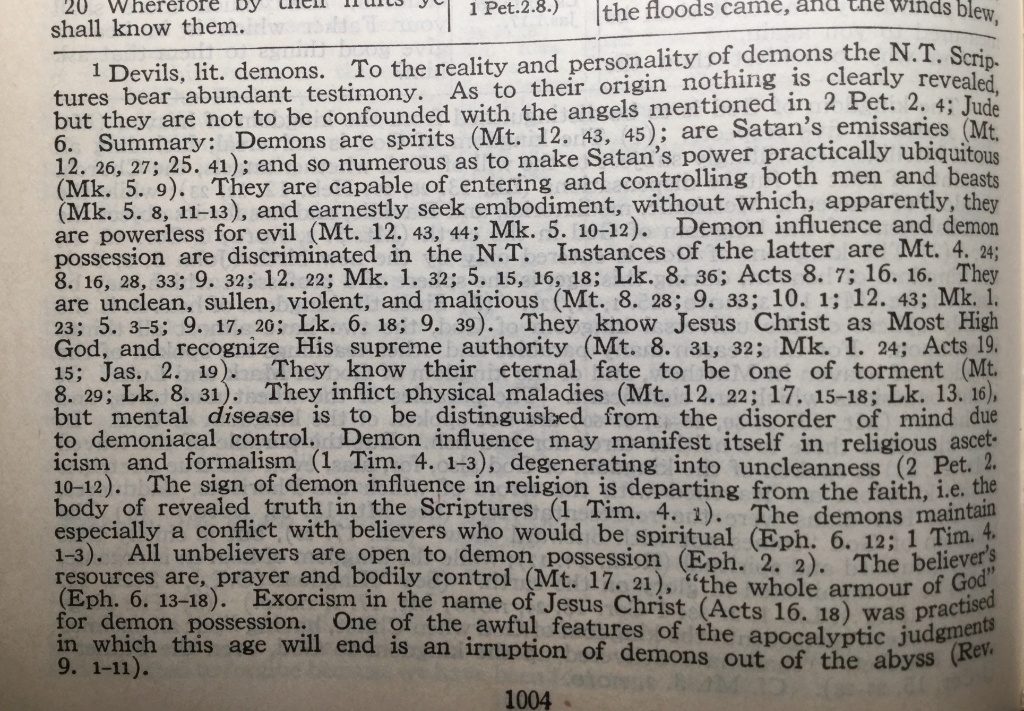
The theological infrastructure for American Christian Zionism did not emerge organically from Scripture. It was built by a single book: the Scofield Reference Bible (1909), whose footnotes embedded dispensationalist premillennialism — including the claim of a separate, ongoing covenant with ethnic Jews requiring a future Jewish homeland — into the most widely distributed annotated Bible in the English language.
C.I. Scofield was a convicted fraudster who abandoned his first wife and daughters, self-awarded himself a doctoral title, and produced a Bible with notes that systematically reframe the New Testament's treatment of Israel in a way that makes Christian Zionism the logical conclusion. Whether his funding came from Zionist elites or from dispensationalist Christian businessmen — and the historical record is genuinely contested on that point — the effect was the same: a generation of American evangelicals was handed a Bible in which supporting a Jewish state was presented as faithfulness to prophecy.
The full analysis of Scofield's biography, his social network, and the question of deliberate versus organic influence is covered in the companion social post breakdown. Read: The Scofield Bible & Alleged Zionist Influence →
God is still calling — Matthew 23:37. The longing is real. Individual Jewish believers are being grafted back into the olive tree through faith in Messiah. This is happening now. It is not the same as national covenant restoration.
Israel is cut off and not yet restored — Romans 11:17–24. The cutting off is explicit. The conditions for restoration are theological: faith and repentance. Ethnicity and real estate stand outside them, and the modern state has met neither.
The Times of the Gentiles are not yet fulfilled — Luke 21:24. The prophetic clock for Israel's national restoration is set to an event that is still future. The 1948 partition was a political act, a different category of event.
Replacement theology is also wrong — the church did not inherit Israel's covenant wholesale. The Jewish people have a genuine prophetic future. But it is future, and it rests on the stated condition of faith rather than on statehood.
Christian Zionism is a theological error — constructed on a manufactured reading of prophecy, transmitted through a fraudster's footnotes, and used to generate unconditional political support for a secular state that has proven itself willing to kill the people it claims to protect.
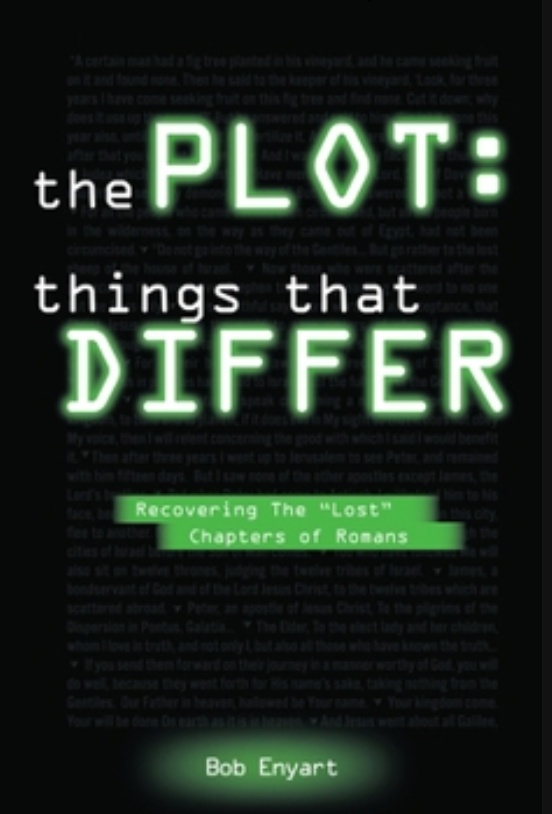
Israel is the Bride.
The Church is the Body.
This article argues that God divorced Israel and that Romans 11 records the cutting off. That argument only holds if you understand who Paul is writing to, and why his gospel is distinct from the gospel of the kingdom preached to Israel. The Plot by Bob Enyart recovers the dividing line the NT itself draws — two covenants, two audiences, two destinies. Israel is the feminine Bride of God with a Sinai marriage covenant, a documented divorce, and a future restoration. The Church, the Body of Christ, is something entirely new, with its own calling distinct from Israel's.